Tuesday, July 10, 2007
On 9 July authorities discovered two VBIEDs in the southern Yemeni port city of Aden. Details of the discovery remain unclear. The discovery follows the 2 July bombings in Marib that killed seven spanish tourists. Yemeni forces have been carrying out a series of operations following the Marib incident. At least 15 suspected al-Qaeda militants have been captured and one killed in a shootout with police in Sanaa on 4 July. For more on the threat from terrorism in Yemen see below.


Thursday, July 5, 2007
Al-Qaeda's menacing presence in Yemen

On 2 July 2007, a suicide bomber drove his vehicle into a group of Spanish tourists in the Marib governorate, 140km east of the Yemeni capital, Sanaa, killing seven tourists, two local Yemenis and injuring a further six people. The attack, allegedly carried out by an al-Qaeda linked militant, occurred near an ancient temple to the Queen of Sheba (or Bilquis). The tourists were preparing to leave the area with their police escort when the bomber struck. This attack is one of the most severe on foreign interests in recent years and provides an example of the ongoing high threat from terrorism in this impoverished country. It also comes at a time when 36 members of al-Qaeda are standing trial in Yemen for planning and carrying out terror attacks. Several of these militants are still on the run, after they escaped from a Sanaa prison in February 2006.
Yemen is a country deeply connected to al-Qaeda. This is evidenced by the disproportionally large number of Yemenis within al-Qaeda's ranks and by the fact that Yemen is the ancestral home of al-Qaeda leader, Osama bin Laden. Yemen has also been the scene of numerous al-Qaeda attacks since the 1990s. More recently, in September 2006, militant groups carried out attempted attacks against two oil facilities in Marib and in the Dhabah region of Hadramawt. This attack followed the bombing of the US navy vessel, the USS Cole, in October 2000 and other minor attacks on the British, US and Turkish embassies. In 2002 al-Qaeda also claimed responsibility for an attack on an oil tanker off the Yemeni coast.
Yemen is a country deeply connected to al-Qaeda. This is evidenced by the disproportionally large number of Yemenis within al-Qaeda's ranks and by the fact that Yemen is the ancestral home of al-Qaeda leader, Osama bin Laden. Yemen has also been the scene of numerous al-Qaeda attacks since the 1990s. More recently, in September 2006, militant groups carried out attempted attacks against two oil facilities in Marib and in the Dhabah region of Hadramawt. This attack followed the bombing of the US navy vessel, the USS Cole, in October 2000 and other minor attacks on the British, US and Turkish embassies. In 2002 al-Qaeda also claimed responsibility for an attack on an oil tanker off the Yemeni coast.
The 2 July bombing in Marib follows recent warnings from al-Qaeda that it would carry out attacks against government interests in Yemen. On 30 June 2007 it threatened to carry out unspecified attacks if its captured members were not released from Yemeni jails. On 1 May 2007 al-Qaeda in Yemen also purportedly told a local journalist that it was preparing to carry out attacks against members of the Yemeni security forces. This they said was in retaliation for the alleged torture of al-Qaeda suspects while in police detention, and for other attacks against the al-Qaeda leadership, most notably the assassination in 2002 of the head of al-Qaeda operations in Yemen, Abu Ali al-Harithi. To highlight this threat, al-Qaeda claimed responsibility for the 29 March 2007 slaying of Ali Mahmud Qasaylah, the chief criminal investigator in the Marib governorate. General warnings have also been issued in the past by the group, threatening to target Westerners and Western interests.
Despite the Yemeni government's well-publicised support for the war on terrorism, it faces a number of internal problems that are likely to divert attention away from efforts to combat terrorism. It faces a Shiite sedition in the northern Saada governorate, strong opposition from pro-independence groups in the southern regions, high levels of poverty and government corruption, and as witnessed by the recent attack, an inability to defend foreign interests against extremist attacks. The strength of local tribal groups also makes policing large swathes of territory problematic.
As such, despite Yemen's repeated promises to beef up security at foreign embassies and offices the likelihood of further attacks against Western interests remains a distinct possibility. Even though most visits to the country pass without incident, travellers wishing to visit Yemen are urged to remain cognizant of the high threat from terrorism in the country. They should if at all possible maintain a low profile while in the country. The latest attack also shows that a police escort, while advisable, is no guarantee of a safe trip.
Wednesday, June 20, 2007
The rise of Hamastan - a chance for peace in Palestine?
 19 June 2007 - On 11 June, Hamas initiated a chain of events that would lead to the total collapse of the Fatah security forces in the Gaza Strip. Intense factional fighting was reported throughout the Strip and at least 100 people were killed in the clashes that followed. While internecine clashes have been regularly reported since Hamas' rise to power in January 2006, the routing of the Fatah security forces came as a shock to many observers and to Fatah itself, which thought its position relatively secure. By 14 June Hamas had overrun most Fatah positions and taken the strategically important Preventive Security headquarters in Gaza City. Currently an uneasy calm has settled over the Gaza Strip and the new Fatah government based in the West Bank is making moves to reestablish contact with Israel and reopen aid channels to its impoverished state coffers.
In reaction to Hamas' attacks, Mahmoud Abbas, Palestinian Authority president and Fatah leader, declared a state of emergency in the Gaza Strip, dismissed Prime Minister Ismael Haniyeh, a senior member of Hamas, and dissolved the Palestinian government.
Read more >>>
-Andre Colling
Monday, May 28, 2007
Through The Fog - by David Kenner (Beirut Beltway)
Wars are funny things. On the face of it, this one started for a seemingly apolitical reason -- a bank was robbed, and the army tried to arrest the criminals. It could have been the plot of a particularly spectacular episode of Law and Order. When the serious fighting broke out, the question of how the battle will affect the basic political terrain of Lebanon were irrelevant. Over thirty soldiers have been killed; the terrorists have to die. But how will Lebanon look different, after the smoke clears?
The most intriguing possibility is a crack-up of the pro-Syrian coalition. While Nasrallah is warning that an incursion by the Lebanese Army into Naher el-Bared constitutes "a red line," the FPM supports "any action the army undertakes." (Hat Tip: Beirut Spring) When the matter is purely hypothetical, it is unlikely to break up the March 8th coalition -- all of whose parties are perfectly well aware of the cost of failure. But in the event of a sustained army invasion of the camp, the split could widen.
Meanwhile, I am sympathetic to a strategic argument against invading Naher el-Bared: a guerilla battle in narrow streets, with the distinct possibility of radicalizing the Palestinians present, should be avoided if at all possible. The Lebanese Army also does not, presumably, want to set a precedent of assuming responsibility for patrolling the camps. But I am confused by Hizbullah's moral qualms about the Lebanese Army entering Naher al-Bared. The Shi'a militia opposes the Lebanese Army doing whatever it can to wipe out a group who considers them infidels because -- because -- why? Maybe, because they are temporarily fighting for the same side. Paging Seymour Hersh...
I also cannot imagine that the Aounists really believe that Al Qaeda is setting bombs in Christian areas. It takes a special kind of person to believe that Al Qaeda has lost interest in Iraq, in favor of scaring the Maronites and destroying Lebanon's tourist season. It requires ignorance of the international political situation, any knowledge whatsoever of the international tribunal's imminent creation, and a total lack of understanding of who benefits from chaos in Lebanon. But, in some ways, it no longer matters what Aoun thinks. He has made his bed with Hassan Nasrallah and Syria, and now he needs to sleep there.
And then, of course, there are the Palestinians. There are many questions about how Lebanon will look different after the latest battle; there is one certainty. Naher el-Bared will be half-destroyed and there will be many Palestinian civilians among the dead. The abject poverty that the Palestinians live in will become more abject, the already-high potential for radicalization among the Palestinians will become higher. The Arab governments, which claim to fight on behalf of the Palestinian cause, should be disgraced by their refusal to integrate Palestinians within their own countries. Some things never change.
http://www.beirutbeltway.com/
The most intriguing possibility is a crack-up of the pro-Syrian coalition. While Nasrallah is warning that an incursion by the Lebanese Army into Naher el-Bared constitutes "a red line," the FPM supports "any action the army undertakes." (Hat Tip: Beirut Spring) When the matter is purely hypothetical, it is unlikely to break up the March 8th coalition -- all of whose parties are perfectly well aware of the cost of failure. But in the event of a sustained army invasion of the camp, the split could widen.
Meanwhile, I am sympathetic to a strategic argument against invading Naher el-Bared: a guerilla battle in narrow streets, with the distinct possibility of radicalizing the Palestinians present, should be avoided if at all possible. The Lebanese Army also does not, presumably, want to set a precedent of assuming responsibility for patrolling the camps. But I am confused by Hizbullah's moral qualms about the Lebanese Army entering Naher al-Bared. The Shi'a militia opposes the Lebanese Army doing whatever it can to wipe out a group who considers them infidels because -- because -- why? Maybe, because they are temporarily fighting for the same side. Paging Seymour Hersh...
I also cannot imagine that the Aounists really believe that Al Qaeda is setting bombs in Christian areas. It takes a special kind of person to believe that Al Qaeda has lost interest in Iraq, in favor of scaring the Maronites and destroying Lebanon's tourist season. It requires ignorance of the international political situation, any knowledge whatsoever of the international tribunal's imminent creation, and a total lack of understanding of who benefits from chaos in Lebanon. But, in some ways, it no longer matters what Aoun thinks. He has made his bed with Hassan Nasrallah and Syria, and now he needs to sleep there.
And then, of course, there are the Palestinians. There are many questions about how Lebanon will look different after the latest battle; there is one certainty. Naher el-Bared will be half-destroyed and there will be many Palestinian civilians among the dead. The abject poverty that the Palestinians live in will become more abject, the already-high potential for radicalization among the Palestinians will become higher. The Arab governments, which claim to fight on behalf of the Palestinian cause, should be disgraced by their refusal to integrate Palestinians within their own countries. Some things never change.
http://www.beirutbeltway.com/
Tuesday, May 22, 2007
Al Qaeda's New Front in Lebanon by Walid Phares

Yesterday in northern Lebanon, a group named Fatah al Islam conducted several attacks against the Lebanese Army, killing (up to) 25 soldiers and losing (up to) 15 members in addition to civilian casualties. The fighting is still raging at this hour. This security development, which could be happening in many other spots in the troubled Middle East, from Iraq to Gaza, and from Somalia to Afghanistan, has however a special dimension. It signals in fact the opening of a new front in the War with al Qaeda’s Terror: Lebanon. Here are the reasons:
Fatah al Islam is based in the Palestinian camp of Nahr al Bared in Northern Tripoli, Lebanon’s second largest city with a Sunni majority. The group is an offshoot of another previously formed group, Fatah al Intifada, both dissidents from the Palestinian Authority headed by Mahmoud Abbas and both –importantly- backed and financed by the Syrian intelligence. But Fatah al Islam, formed last November and headed by Palestinian-born Shaker Absi, is linked directly to al Qaeda. Absi was a colleague of Jordanian-born Abu Musab al Zarqaqi, killed by an US air raid last year. Fatah al Islam since its inception has told its supporters and the population in its areas of training and operations that it follows the Jihad of al Qaeda.

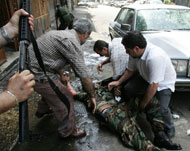
Fatah al Islam is based in the Palestinian camp of Nahr al Bared in Northern Tripoli, Lebanon’s second largest city with a Sunni majority. The group is an offshoot of another previously formed group, Fatah al Intifada, both dissidents from the Palestinian Authority headed by Mahmoud Abbas and both –importantly- backed and financed by the Syrian intelligence. But Fatah al Islam, formed last November and headed by Palestinian-born Shaker Absi, is linked directly to al Qaeda. Absi was a colleague of Jordanian-born Abu Musab al Zarqaqi, killed by an US air raid last year. Fatah al Islam since its inception has told its supporters and the population in its areas of training and operations that it follows the Jihad of al Qaeda.
Fatah al Islam aims at creating an "Emirate" (Islamist principality as in the Taliban model) in the Sunni areas of Lebanon, and is planning on conducting operations similar to the ones in the Sunni Triangle of Iraq. But according to the Lebanese Government and terrorism experts, the group is being secretly supported by the Syrian regime of Bashar Assad. The question arises in the West about the logic of having a so-called “secular” Baathist regime supporting an “Islamic Fundamentalist” organization. First, the Baathist logic is to use groups not necessarily carrying its Pan-Arab ideology to attack the regime’s foes and achieve strategic goals: For decades, the Assad (father) regime supported and used the national-socialist SSNP (Syrian neo-Nazi organization), the Christian war lord Frangieh, the Maronite militiaman Elie Hobeika, Arab Socialist factions, the Shiia Jihadist Hezbollah and most importantly a roster of Jihadi Sunni networks. From Tripoli to Sidon, the Assads' regime manipulated Harakat al Tawheed al Islamee and the Gamaat Islamiya, both al Qaeda-like Jihadists. Inside the Palestinian camps of Lebanon, the Syrian Mukahabarat remote controlled many groupings – Jihadi in their ideology and outlook, but feeding from the Baathist machine.
The axis: Hezbollah & al Qaeda
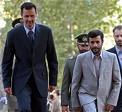

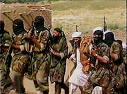
The Fatah al Islam is the latest marriage of convenience between a group of committed Jihadists, rotating in the al Qaeda’s constellation but gravitating around Damascus influence. The group accepts Bashar’s support and the Syrian regime tolerates the organization’s “Sunni” outlook: Both have a common enemy, even though they may come at each other’s throats in the future. The men of Bin Laden anywhere in the world, including in Lebanon, have the same standing order: Bringing down the moderate Arab and Muslim Governments (even in multiethnic societies) and replace them with Emirates. The men of Bashar Assad and Mahmoud Ahmedinijad have converging goals, bring down the democratically elected Government in Lebanon and replace it with a Hizbollah-Syrian dominated regime, as was the case before 2005. Thus each “axis” has one objective in Lebanon: crush the Seniora Government. They will take all their time to fight each other after.
Today's clashes between the al Qaeda linked terror network and the Lebanese Army are a prelude to terror preparations aimed at crumbling the Cedars Revolution, both Government and civil society this summer. It is a move by the Assad regime to weaken the cabinet and the army in preparation for a greater offensive later on by Hizbollah on another front. In short the Damascus-Tehran strategic planners have unleashed this “local” al Qaeda group in Tripoli to drag the Lebanese cabinet in side battles, deflecting its attention from the two main events, highly threatening to Assad: One is the forthcoming UN formed Tribunal in the assassination case of Rafiq Hariri. The second is the pending deployment of UN units on the Lebanese-Syrian borders. Both developments can isolate the Syrian regime. Thus, the Fatah al Islam attacks can be perceived as part of a preemptive strategy by the Tehran-Damascus axis. But the results, if the Lebanese Army fails to contain the terrorists, could be very serious to the Seniora Government and the UN. Worse, if the first piece of a Sunni Triangle is put in place in Lebanon, this could affect the geopolitics of the War on Terror globally: The rise of Salafi Jihadism along the coasts of Lebanon, from Tripoli to Sidon, passing by Beirut. This Emirate-to-be, could become the closer strategic enclave of Bin Laden to the US Sixth Fleet, Europe’s cities and Israel.
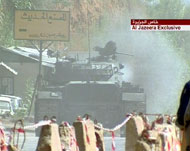
The United States and the West are now faced with a new development which they cannot allow to grow unchecked: an al Qaeda base on the Eastern Mediterranean. The strategic responses are only two: Reshape the Lebanese Army to face off with the Jihadists and deploy multinational forces on the Syrian Lebanese borders as soon it is possible. The Seniora Government also has work to do: It must without hesitation call on the UN Security Council to deploy forces on the borders, in application of UNSCR 1559 and under Chapter 7. The three main leaders of the parliamentary majority supporting the cabinet have opened the path for such a move: Saad Hariri, the leader of the Sunni community has blasted Fatah al Islam as a threat to Muslims; Walid Jumblat, leader of the Druses and Socialists has already been calling for a UN military intervention; and last but not least, the various Christian parties opposed to Assad have accused the Syrian regime of igniting Terror. All planets are now aligned for a successful move against al Qaeda in Lebanon, before it is too late. But the question is: will the Lebanese politicians seize the moment?
Dr. Walid Phares is the author of The War of Ideas: Jihadism against Democracy. He is also the Director of the Future Terrorism Project.
Monday, May 7, 2007
Saada War 3: A human tragedy

Since January of this year followers of the Malik al-Houthi have been waging a low intensity war against the superior forces of the Yemeni Army. Armed with jet fighters, heavy armour and a relatively sophisticated array of ground weaponry the Yemeni Army have been unable to shake the resistance of the Houthi fighters. Fighting continues to rage across Saada govenorate and to date has been limited there. Fighters from other Yemeni tribes have allegedly joined the government ranks, a move that lays the platform for future inter-tribal conflicts. The government has been unwilling to negotiate with the Houthis, despite having done so in two previous insurrections in 2004 and 2005. This move has suprised many, including myself. Yemen has repeatedly blamed Iran and Libya for supporting the rebels a sign that a different agenda is at play. It is possible that the government is doing this to secure further concession from the US (in terms of financial aid). Who knows? Meanwhile thousands of civilians continue to be displaced and hundreds of troops killed int he battles. The tragedy of Saada enters its fourth month.
Subscribe to:
Posts (Atom)